Before buying lift kits and truck accessories in Reading, choose between a leveling kit and a complete suspension lift. A leveling kit corrects factory rake while preserving daily manners, and a suspension lift adds clearance, wheel travel, and bigger tire options. Collect exact year, trim, drivetrain, and suspension specs to confirm Rough Country fit. Plan for tires, alignment, and add-ons like steps, lights, or liners—you'll understand how the right setup comes together.
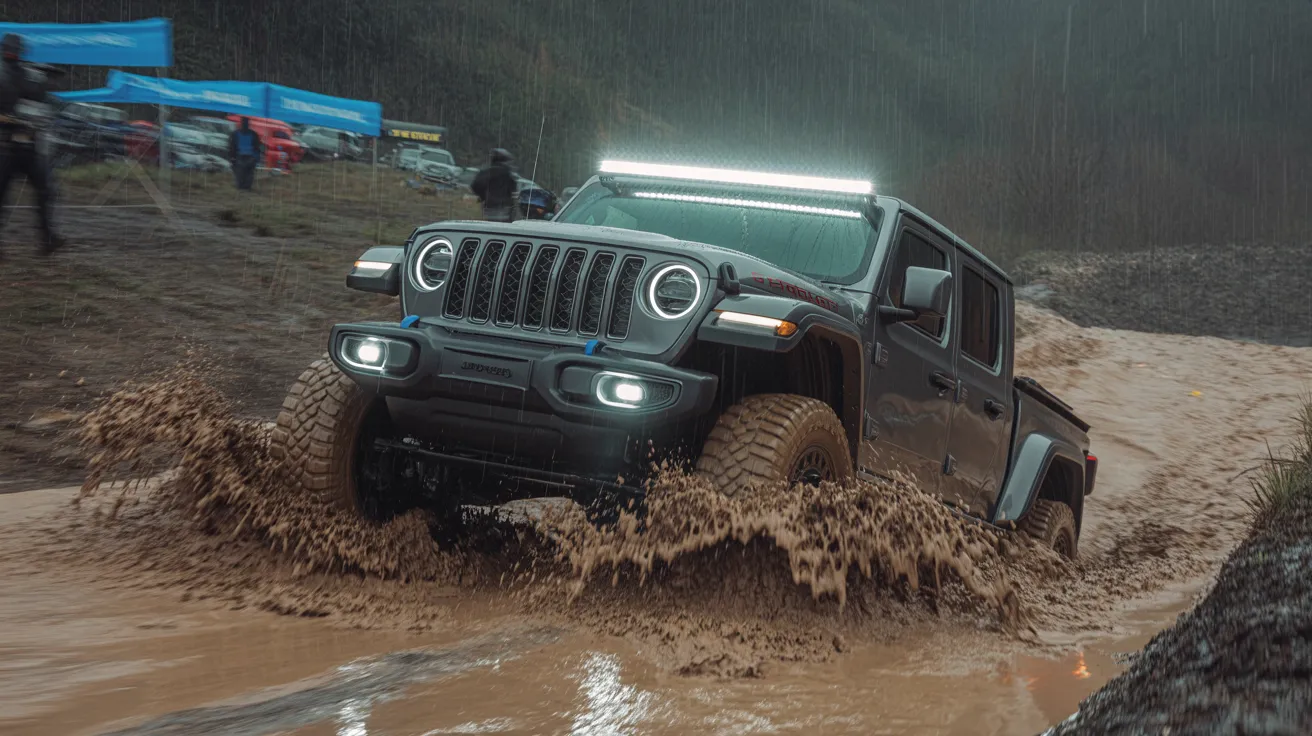
Essential Information
- Select a leveling solution to eliminate factory rake while maintaining near-stock handling and fitting bigger tires for daily commuting.
- Go with a suspension lift kit for better clearance, suspension travel, and off-road performance, recognizing steering and handling may change.
- Confirm proper fitment by verifying your truck's year, model, make, drivetrain, trim, cab, bed, and suspension setup before ordering Rough Country products.
- Align lift height and shock choice with your use, addressing commuting, trail use, towing, or intensive off-road driving.
- Reserve budget for more than the kit cost itself, with costs for alignment, labor, wheels, tires, shocks, and extra accessories like steps, lights, and liners.
Suspension Lift Kits vs Leveling Kits
Although both modifications change your truck's profile, suspension lift kits and leveling kits solve distinct issues and deliver varying outcomes. A leveling kit usually raises the front to match the rear, fixing factory rake with little alteration to geometry, ride height, and day-to-day drivability. You pick one when you desire a cleaner profile and space for bigger tires.
A suspension lift kit elevates the whole truck and adjusts key components to create increased clearance and wheel travel. You'll see bigger gains in ride height, off-road capability, and tire options, but you will anticipate handling changes, steering modifications, and an elevated center of gravity. If you want mild visual correction, use a leveling kit. When you require real clearance and articulation, lift it and build the supporting mods tailored to your application.
Which Rough Country lift kit fits your truck?
Start by gathering your truck's year, manufacturer, and model, drive configuration, and your intended application, since Rough Country creates lift kits based on specific platform requirements and performance objectives. This baseline shows you which structural components and hardware attach properly without geometric conflicts.
Then verify stock ride height, cab and cargo configuration, axle setup, and if your truck runs 2WD, 4WD, or adaptive suspension. Rough Country compatibility guides simplify this check, although you have to validate model compatibility versus configuration-specific parts and factory package variations. A kit that fits a Silverado 1500 won't fit a Trail Boss, and a Ram with air-spring suspension demands different provisions rather than a vehicle with coil suspension. Once you confirm exact fitment, you eliminate fitment surprises, component conflicts, and return hassles.
Find the Rough Country lift kit that fits your driving habits.
Match the kit to how you drive, and you'll enjoy enhanced ride quality, longevity, and tire space without purchasing unnecessary related resource capability. If you primarily commute in your truck, pick a simple Rough Country leveling kit or a 2 to 3.5 inch suspension setup calibrated for daily comfort and predictable steering behavior.
When your truck sees both pavement and trail time, move up to a lifted suspension that includes improved shocks and optimized control arm positioning. You'll experience enhanced off-road performance, superior articulation, and clearance for larger tires without overloading original components. For extensive off-road use, focus on raised struts, N3 or Vertex dampers, and setups that keep driveline angles correct under compression. The right Rough Country package must match payload, speed, and terrain, and how much ride firmness you'll actually tolerate.
Leading Rough Country Truck Accessories
Finish your lift setup with Rough Country add-ons that solve the real weak points you'll discover after the lift, new tires, and stance change. Focus on improved entry steps or rock sliders, that bring back cabin access and offer undercarriage protection once your truck sits higher and wider.
Then emphasize visibility and control. Rough Country LED lightbars increase usable sightlines on dim trails, jobsites, and remote roads without difficult installation. Seat covers and cargo liners protect the interior from mud, gravel, and water you'll drag in after trail use. Fender extensions reduce tire spray and complement the expanded stance made by bigger tires. For towing and recovery work, commercial-grade hitches, recovery hooks, and bumpers that support winches provide function without sacrificing compatibility. Pick accessories that match your truck's new geometry and workload.
How Much Should You Budget for Your Build?
Once you've selected the suspension kit and complementary components, establish a budget that exceeds the headline kit price. You'll require funds for shock absorbers, wheels, tires, alignment services, labor, and any drivetrain or steering adjustments your platform needs. Brand reputation is crucial here; top-tier kits typically deliver tighter tolerances, superior ride comfort, and less installation trouble.
In terms of practical budget estimates, expect entry-level spacer or leveling setups to start lower, whereas full suspension setups with control arms, adjusted dampers, and larger wheels climb quickly. Install difficulty, shop rates, and calibration work can add substantially. You must also budget supporting upgrades like gear changes, brake components, and recovery gear if you're building for trail use. When finances are limited, weigh loan options cautiously and stress durability over flashy add-ons.
Questions You Might Have
Will Lift Kits Change My Factory Warranty?
Yes, lift kits may impact your factory warranty coverage, but they don't automatically void it. You face warranty implications if the manufacturer demonstrates the lift modification brought about or was part of a defect. Powertrain, steering, suspension, and drivetrain claims frequently create dealer disputes. You need to preserve installation records, use quality components, and follow service intervals. That helps you refute denied claims and safeguard warranty where the modification isn't at fault.
Will Larger Tires Need Re-Gearing?
Yes—should you jump multiple tire sizes, you'll typically need re-gearing. For example, when you move from 31s to 35s, your vehicle can feel sluggish, shift improperly, and put strain on the drivetrain when carrying weight. Adjusting gears restores effective gear ratios, enabling you to recover acceleration, towing power, and transmission response. You might not need regearing for a minor upsizing, but if performance, fuel mileage, or gear shifting decline, it's typically the best option.
How Frequently Should You Inspect Lift Parts?
You ought to check suspension components following the initial 500 miles, next during each oil change or every 3,000 to 5,000 miles, depending on use. Periodic inspections help you identify bushing degradation, shock leakage, bracket damage, and alignment problems early. Check Fastener torque after hard off-road runs, towing, or impacts. Should you operate in muddy, salty, or rugged conditions frequently, shorten intervals and inspect steering and suspension parts at shorter intervals.
Does a suspension kit impact your vehicle's towing and payload limits?
Yes, a suspension lift can alter your truck's towing and payload limits. When you increase ground clearance for more ground clearance, you shift suspension alignment, weight balance, and force distribution on parts. That can reduce stability when loaded and increase drivetrain stress, most notably with bigger tires. You should stick with your factory specifications unless an engineered kit explicitly states revised capacities. Correct alignment, gearing, and braking function matter too.
Are Alignment Services Needed Once You Install Truck Accessories?
Yes—if components modify ride elevation, suspension geometry, steering angles, or tire size, you need an alignment. You'll notice the impact right away: slight changes can pull your truck off-center, scrub tread, and compromise handling. A full alignment restores camber, caster, and toe to spec. After certain installs, you may also need brake calibration for driver aid precision. You protect tire durability, steering precision, and real-world safety by checking alignment immediately.
Conclusion
Selecting the ideal suspension setup and accessories copyrights on how you use your truck, your desired look, and what your budget can handle. When you align a Rough Country lift kit to your driving style, you'll get performance, clearance, and looks which coordinate like a well-tuned drivetrain. Add intelligent upgrades, organize your budget responsibly, and you'll build a truck which becomes reliable for streets, capable off it, and set for any future work.